
Showing posts with label abortion. Show all posts
Showing posts with label abortion. Show all posts
Friday, January 3, 2020
Primary Cause
The more I consider it, the more it makes sense to me that the real cause of abortion is simply rupture between generations. A kind of proto-abortion of the delicate-yet-vital connection between parent and progeny, writ large, providing the vacuum context for abortion to even be conceivable. But it came before the wide practice of abortion, and caused it.
One could point to the two world wars for starters. One could point to the industrial revolution as a huge primary cause of abortion and completely bypass the sexual revolution as merely symptomatic, and that person would be more in line with the truth than a great percentage of politicized pro-lifers who have their litany of quasi-sacramental purity test talking points at the ready.
An interesting concept to think about is a legitimate reversal of St. Theresa of Calcutta's famous statement that the fruit of abortion is nuclear war. The evidence is certainly in: the fruit of all war, of intergenerational rupture, is abortion. From there it works the other way like a closed circle. I have this notion that whenever someone connects abortion with sexual immorality the devil claps his hands with delight.
The incoherence of the pro-life movement was made very apparent by its pouncing without a second of consideration on Pope Francis's words when he was asked about what were the most important issues of our day, and he answered it was youth unemployment and the disconnect from the elderly. He has talked on numerous occasions about how the new generations must keep in touch with the wisdom of the oldest generations. There is an abyss that never used to be there: that is the cause of abortion. That is the primary cause, and unless you address the primary cause, it is not going away.
The removal of care for the elderly and the unemployment of youth are connected. I think Pope Francis sees deeply and simply.
These are the symptoms of an abyss that has opened more and more between the elderly and the young. And as long as that abyss remains unbridged, the longer that abortion will be with us.
You know this is true.
You think that "build bridges and not walls" is a feel-good, fuzzy, peacenik, felt banner slogan?
That's because you're a relativist who doesn't believe in the Gospel.


Wednesday, October 10, 2018
We could take care of that for you
Perhaps the most God-fearing person I know is a tough old Jewish lady whose many hedges I trim and prune on her acreage. A great wall going around the front yard and into the back, around fifteen feet high that takes days just for one side, cylinders down the snaking driveway, separate huge boxes, outer parameters with lengths of solid wall, backyard boxwood, all the individual specimens, etc. She likes things squeaky clean and I'm
She's the kind of lady you can picture coming out of her house in a bathrobe and carrying a shotgun for any intruders. She speaks her mind no matter who you are, and it's upfront and somewhat loud, somewhat boisterous, and, I don't know how to say it, she gets it out there, especially if there is something she sees that is wrong. She's the kind that bureaucrats cannot stand.
Though I've always liked her, I remember the time when I grew especially fond. A number of years ago, somewhere around late September, I was working away on the boxwood (the majority are cedar) and it was getting toward evening when she came hurrying out and spoke with emphatic energy.
"You gotta go! You gotta get all the equipment up and get out of here!" And then she said it was - I can't remember what Jewish day it was - it was a big one. At the time it was quite hot and I welcomed the sudden command to quit for the day and go home. If I'm working on a Friday I make sure to pack up before sunset.
But the way she expressed it - this urgency that had to do with something greater than any of us, or any thing. Why did I feel such joy under that fiery and fierce injunction to pack up?
We never talk religion though.
Another time my fondness for her grew - let's call her D. - was when she told me about some of her family coming up to visit her from the US, I think her niece. She had her boyfriend along (cohabiting), and they were assuming they were to share a room at night, when D. said to them, point blank, "Not under my roof you won't!"
I wish I could describe the way D. said it - "Not under my roof you won't!" I laugh about that when I remember it.
Just last week we got to talking about the Hell's Angels and the CIA (D. was explaining to me how the Hell's Angels originated after the Second World War), and in the conversation she told me how she worked as an accountant for a mill at the age of eighteen doing payrolls for an exceedingly large number of workers in a very short period of time.
There was a man who worked there, and D. went on about how nice of a man he was: he was the nicest man she had ever met.
One day she started complaining to this incredibly nice man about her boss, and the nice man said to her, "Would you like him taken care of?" To which D. - quite shocked - said, "What?"
And he said, "I can get him taken out for you" as he went on to explain in his nice manner about how he belonged to a group that existed precisely for doing such things - that is, killing people. He wasn't kidding.
D. of course emphatically told him NO, and as shocked as she was by this, what shocked her even more was the way this man broached the subject. He talked about it like someone might talk pleasantly about the wine tour they were looking forward to on the weekend, or about the local coffee shop whose lemon squares come highly recommended.
Long story short, I started thinking about that story today; and that there are many, many very nice doctors.
Some of the nicest doctors you could ever meet.
Saturday, February 27, 2016
Why should it be necessary for the Congo story to be ultimately true or untrue, since nuns are vowed to celibacy and thus are not engaging in conjugal relations with a spouse?
The category "avoiding pregnancy" as applied to a nun could only and ever be under the form - ironic as it may be - of taking a pill that prevents ovulation in the case of the very real threat of being raped. For again, she is not in conjugal relations with a spouse. And her celibacy is not about avoiding pregnancy; not becoming pregnant is merely accidental to it. The category "avoiding pregnancy" as applied to married couples can only and ever be legitimately applied under the form that is termed Natural Family Planning in the case of certain contexts and circumstances.
In other words, a huge implication of Pope Francis's statement is that NFP is not in and of itself a good. For he said that "avoiding pregnancy", in contradistinction to the intrinsic evil of abortion, is not an absolute evil. Which is also to say that it is not good all of the time, or even some of the time, or even when it is lawful.
If avoiding pregnancy is termed as not necessarily an absolute evil, then it can be an evil. Indeed, it is an evil if a couple avoids pregnancy because they just don't want children when they have the means, or only want so many, or want instead to accumulate mammon, either indefinitely or for a planned period of time. This would include Natural Family Planning, the rhythm method: if it is used for the above reasons, then you are contracepting, which is an evil, according to the teaching of the Catholic Church.
Pope Francis was upholding solid Catholic teaching against the neo-Catholic belief that NFP is good no matter what.
He was also reiterating a previous statement he made about a mother who needed to avoid pregnancy, under his own admonishment, so as not to deprive her existing children of a mother. He stated that some Catholics mistakenly think that they need to breed like rabbits.

The category "avoiding pregnancy" as applied to a nun could only and ever be under the form - ironic as it may be - of taking a pill that prevents ovulation in the case of the very real threat of being raped. For again, she is not in conjugal relations with a spouse. And her celibacy is not about avoiding pregnancy; not becoming pregnant is merely accidental to it. The category "avoiding pregnancy" as applied to married couples can only and ever be legitimately applied under the form that is termed Natural Family Planning in the case of certain contexts and circumstances.
In other words, a huge implication of Pope Francis's statement is that NFP is not in and of itself a good. For he said that "avoiding pregnancy", in contradistinction to the intrinsic evil of abortion, is not an absolute evil. Which is also to say that it is not good all of the time, or even some of the time, or even when it is lawful.
If avoiding pregnancy is termed as not necessarily an absolute evil, then it can be an evil. Indeed, it is an evil if a couple avoids pregnancy because they just don't want children when they have the means, or only want so many, or want instead to accumulate mammon, either indefinitely or for a planned period of time. This would include Natural Family Planning, the rhythm method: if it is used for the above reasons, then you are contracepting, which is an evil, according to the teaching of the Catholic Church.
Pope Francis was upholding solid Catholic teaching against the neo-Catholic belief that NFP is good no matter what.
He was also reiterating a previous statement he made about a mother who needed to avoid pregnancy, under his own admonishment, so as not to deprive her existing children of a mother. He stated that some Catholics mistakenly think that they need to breed like rabbits.
"Planned Parenthood does wonderful things, but not as it relates to abortion." --Donald Trump

Wednesday, December 2, 2015
Came across this booklet
My bookshelf always has surprises in store for me. A good deal of it was inherited and lots of it I've barely skimmed over. I was pleased to find this booklet the other night:

LOL! That's Pierre, by the way. What a horrible Prime Minister he was. He made abortion "legal", before the States did, and it was done in that Canadian law way in which it was declared simply that there was no law. Under Pierre Trudeau the legalization of abortion was worse, if you can imagine, than the legalization that took place in the US. After the initial legalization in 69, he made it open season on the baby in the womb in every sense, later on, in the eighties.
The booklet is from the early eighties. I haven't read it yet, but I will.
Here are pages of just the introduction:

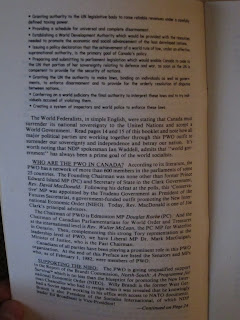


LOL! That's Pierre, by the way. What a horrible Prime Minister he was. He made abortion "legal", before the States did, and it was done in that Canadian law way in which it was declared simply that there was no law. Under Pierre Trudeau the legalization of abortion was worse, if you can imagine, than the legalization that took place in the US. After the initial legalization in 69, he made it open season on the baby in the womb in every sense, later on, in the eighties.
The booklet is from the early eighties. I haven't read it yet, but I will.
Here are pages of just the introduction:


Friday, May 9, 2014
Monday, February 4, 2013
Live birth abortion in Canada
I think hospitals and abortion clinics should at least be honest and leave live-birth babies outside on the steps of the buildings in which they were due to be terminated as a "woman's right to choose". If you're going to be murdered by exposure, then at least do it openly, you know, like in ancient Rome?
And like in those times, we should have open pits, on the vestiges of cities, and just call them human dumps, and they can be filled with the babies left to die and the euthanized.
Ah, but those pesky Christians would then be snatching those babies away and actually feeding and clothing them and those babies would grow into adults. Can't have that.
I guess the "free press" is sort of like the "free market", ain't it?
Monday, November 26, 2012
Baby Eaters
"From the earliest days human beings have made good use of unwanted children. They were thrown into the fires to feed Moloch a god of the Canaanite, they were employed as slaves and still are in many places. They were sacrificed to insure good harvests to the rain god Tlaloc by Aztec priests who then ritually ate their corpses. Why all the sentimentality about not eating them? No one wants them. Though there is very little actual eating of babies as of this current writing, I have every confidence that, with time, that will change.
....So let us be honest and brave and stop referring to abortion and abortion rights and abortion clinics. Let us call it what it is: Baby Eating. Those who participate in it are Baby Eaters. People need to say quite boldly and clearly that by their vote and their tolerance they admit that people have the right to eat their own babies, or the babies of those who throw their children in dumpsters. Baby Eaters. Get used to the term. We are a society that devours its young."
--Reverend Know-it-all responding to a query about Senomyx's use of fetal cell lines for developing better tasting drinks: HERE.
Tuesday, June 19, 2012
Quitting Abortion Work
A group that reaches out to abortion clinic workers wishing to leave the abortion industry and offers legal, financial, spiritual and emotional support for their full transition out of the abortion industry.
That's the kind of idea that makes one ask, "Why wasn't it done before?"
Well, here they are: And Then There Were None
Also, it's better than going to abortion clinic workers and leading them to commit sin by lying to them.
That's the kind of idea that makes one ask, "Why wasn't it done before?"
Well, here they are: And Then There Were None
Also, it's better than going to abortion clinic workers and leading them to commit sin by lying to them.
Tuesday, May 8, 2012
Ugh! Those Disgusting People!
People across the internet - which is to say, across the world - are showing their disgust and outrage over pills smuggled from China that contain the powdered flesh of aborted babies. Those disgusting people, they say in the comment boxes, and those disgusting people who consume them - so stupid - believing such things will cure them or keep them young! Outraged! Horrified! Disgusted!
But fetal cells to grow our vaccines and make anti-wrinkle creams and cosmetics and fetal cells for Senomyx to develop better-tasting food, and embryonic stem cells for endless research and fetal tissue transplants to treat things like Parkinson's - who are you to deny anyone that? Now just you shut up about that! For that is the true fountain of youth that will cure us and keep us young! Not like those barbarians!
We've made our plank to the dimensions of infinity.
Because we are so smart, decent and don't want to do no harm to no one.
But fetal cells to grow our vaccines and make anti-wrinkle creams and cosmetics and fetal cells for Senomyx to develop better-tasting food, and embryonic stem cells for endless research and fetal tissue transplants to treat things like Parkinson's - who are you to deny anyone that? Now just you shut up about that! For that is the true fountain of youth that will cure us and keep us young! Not like those barbarians!
We've made our plank to the dimensions of infinity.
Because we are so smart, decent and don't want to do no harm to no one.
Sunday, January 2, 2011
Would like to see this
Dive! Trailer from Compeller on Vimeo.
H/T for the video: The Aesthetic Elevator
The simple answer, which I'm sure the documentary gets to, is that grocery stores throw the food away instead of giving it away because otherwise people would be asking for the throwaway stuff before buying it. There's also the liability factor.
Of course it's wrong. The wrongness of it runs deep into the underpinnings of our society and culture, and does not just exist as a matter with the grocery stores themselves - something which I'm sure the documentary gets into as well.
A close friend of our family who we called uncle (and his wife, aunt) immigrated here in his youth from Denmark with his wife, and they homesteaded up northeast. They were in a sense pioneers. When they had retired, the time at which we knew them, a good few decades before they both died, they were pretty well off. But he, our uncle, dumpster-dived to the end of his days - and more so after his wife died. I went with him on a couple of occasions to help.
Knowing scarcity of food, or the acquaintance with labouring to make and get food and to preserve it - its existence in your life being entirely dependent on your time and effort - I guess that's something which does not really leave you, even when you have the money later on. At least that's what I understood, observing my uncle.
The grocery store at which he dumpster-dived later reconfigured their bin system, so that it was basically connected to the building and could not be accessed by anyone other than employees.
The waste of food is intimately connected with the production of food as a commodity. Many will say, but food is a commodity. In fact, you might say that, in the end of things, food is the only real commodity. Yes, in many ways it is. But the "commodity" we're talking about right now is something vastly removed from Harry walking to Tom's farm and saying he'll exchange some cedar shakes for a sack of potatoes. The very principle on which today's industrial farming is based is a monster. Hundreds upon hundreds upon thousands upon thousands of acres of land get literally raped - milked solely for profit. That's the short of it of course, but it's true.
And when corporations like Monsanto come along and try to tell us that they are feeding the world and keeping us all from starving, just remember certain things: how much goes to waste in such a system, not only after the grocery stores but before them, through transportation and packaging. Remember the multitude of things that go wrong when we are so disconnected from the production of what we eat. We become slaves. That's the main thing: we become servile. And people still starve. In fact, I think that after the right to life, the deep-seated issue of abortion, the issue of food and its control (and all the related issues of stewardship and creation) is the next big one, which for all the talk concerning it, to me is the baby elephant in the room that we are going to find, perhaps shortly, has suddenly grown to full size.
Monday, November 30, 2009
Why "4 Months, 3 Weeks and 2 Days" is not a pro-life film
"Romanian filmmaker Cristian Mungiu depicts with bleak accuracy and wry observation what it's like to navigate the back alleys, easy cruelty and sheer pettiness in a totalitarian society in "4 Months, 3 Weeks and 2 Days." This is not the stuff of concentration camps, strong-arm tactics and vicious repression, but rather a society's complete indifference, absent even the slightest human empathy, toward two hapless young women trying to resolve an unwanted pregnancy. Yes, the ostensive portrait is of the final years of Communist rule in Romania, but the film speaks to the banality of evil in all political systems and the contemptuous creatures more than willing to exploit the vulnerable in all societies."From Reuters Top Ten Movies of the Decade.
Yes, the fact that pro-abortion advocates would find the film supportive of their view does make the film not very pro-life. No, the fact that the film is disturbing about the procuring of an abortion does not mean that the film is pro-life.
As far as, "Well, it's neither you see, because it's a work of art and art is not supposed to bash us over the heads with messages..." and so forth, well, it's not that great of a work of art to begin with. And art that sucks, sucks about life.
I saw the film and found the content obviously repulsive. Yes, the film is harrowing and disturbing and bleakly gritty and grittily bleak and yadda yadda. The film "accurately" depicts a night of nightmare. So what? But not one minute of the film did I find to be engaging with the lineaments of life, not with life in its suffering, not with life in its absurd distortions; in fact, if it weren't for the unflinching gritty harrowing disturbing bleakness, what you have here is an after-school special. So lets replace this regime with another regime (not with one of those bad regimes of course, but the good ones that have safe legal abortions and have done away with all that back alley lack of empathy) why don't we? The film is a clunker.
Thursday, October 1, 2009
Sunday, May 31, 2009
Clockwork
Two weeks to the day after Obama gives his "lets dialogue because pro-aborts are so reasonable, unlike you pro-lifers who need to stop demonizing us" speech at Notre Dame, George Tiller, the infamous late-term baby killer gets shot dead in Kansas.
The Old Dragon runs a tight ship.
Too tight.
The Old Dragon runs a tight ship.
Too tight.
Sunday, May 17, 2009
A slick, grandiose speech white-washes well
After reading Obama's speech that he gave at Notre Dame, I have to say this:
They are the 'fair-minded' words that precede the onslaught of a major persecution.
His words are the 'fair-minded' solidification of pro-life, anti-abortion traditional Catholics and Christians as not only holding absolutely untenable 'views', but an irrational force standing in the way of collective peace and harmony. Oh no, it's not there explicitly; he leaves that for the listener to develop within the context of his speech's presentiment of a fuzzy world where the 'crossroads' of conflict don't ever, well, conflict.
As absolutely as the sacredness of every human life, born and unborn, being protected by law is the basis for all other law and debate thereof, so Obama absolutely solidifies his pro-abortion 'inflection' and pro-abortion 'laws' in the elusive sleight-of-hand that there exists some equal neutral ground where we simply just don't agree. Uh, no. Remember, uhm, you guys are the ones enforcing and keeping in practice abortion? You guys get what you want while you tell us about some common ground where we just don't agree?
Is the arrogance for real?
They are the 'fair-minded' words that precede the onslaught of a major persecution.
His words are the 'fair-minded' solidification of pro-life, anti-abortion traditional Catholics and Christians as not only holding absolutely untenable 'views', but an irrational force standing in the way of collective peace and harmony. Oh no, it's not there explicitly; he leaves that for the listener to develop within the context of his speech's presentiment of a fuzzy world where the 'crossroads' of conflict don't ever, well, conflict.
As absolutely as the sacredness of every human life, born and unborn, being protected by law is the basis for all other law and debate thereof, so Obama absolutely solidifies his pro-abortion 'inflection' and pro-abortion 'laws' in the elusive sleight-of-hand that there exists some equal neutral ground where we simply just don't agree. Uh, no. Remember, uhm, you guys are the ones enforcing and keeping in practice abortion? You guys get what you want while you tell us about some common ground where we just don't agree?
Is the arrogance for real?
Monday, March 23, 2009
At Conception
"Perhaps a reason that Christ’s story begins at conception is to bring a message to a world in which the womb is no longer a safe haven.
Perhaps it is to remind us that the most beautiful words in the world are not those spoken at the birth of a baby when the doctor pronounces the child alive and healthy.
Instead, the most exquisite words are the little veiled conversation that goes on in the heart of the mother many months earlier, when she first learns that she is pregnant.
The loveliest words of all come despite inconvenience, despite having other plans, despite being too young or too old, despite being too poor, despite being scared, despite being unmarried, despite being afraid of death.
The most beautiful words of all come at the moment when the mother whispers to God: “Let it be.” And that’s where the story begins."
From a post, Saying Yes to God by Lorraine V. Murray at The Ink Desk.
Perhaps it is to remind us that the most beautiful words in the world are not those spoken at the birth of a baby when the doctor pronounces the child alive and healthy.
Instead, the most exquisite words are the little veiled conversation that goes on in the heart of the mother many months earlier, when she first learns that she is pregnant.
The loveliest words of all come despite inconvenience, despite having other plans, despite being too young or too old, despite being too poor, despite being scared, despite being unmarried, despite being afraid of death.
The most beautiful words of all come at the moment when the mother whispers to God: “Let it be.” And that’s where the story begins."
From a post, Saying Yes to God by Lorraine V. Murray at The Ink Desk.
Wednesday, December 24, 2008
Acrostic Poem (on Abortion)
Assuage the one whose wounded womb, in-slain,
Bears the double death, betrayal's ice,
O living flame from the sacred heart of Christ.
Remove, by Your murdered Corpus, murder's stain.
Take the mother's tears to drown the echoing
Imprint of the infant beating heart's bane:
Only every ounce of each one's being, a lost child,
Needs Your in-dwelling, O Eucharistic Christ Child.
Bears the double death, betrayal's ice,
O living flame from the sacred heart of Christ.
Remove, by Your murdered Corpus, murder's stain.
Take the mother's tears to drown the echoing
Imprint of the infant beating heart's bane:
Only every ounce of each one's being, a lost child,
Needs Your in-dwelling, O Eucharistic Christ Child.
Friday, November 28, 2008
Christian filmmakers at work

"Its circuit boards cracked, the camera refused to start up for ten minutes … at least, not until members of the cast and crew gathered around the camera and prayed over it. At that point it fired up, and the shoot was completed.
Tim says that in the whirlwind of post-production he and his brother completely forgot about the incident - until they sent the camera back to the manufacturer. The manufacturer, he relates, said that “all the circuit boards were cracked and there was no way this camera should have been able to work.”
This incident, which the young director posits may be a veritable miracle, is just one of a host of remarkable stories that surround the making of “Volition.” Indeed, the creation of the short film is steeped in coincidences and startling circumstances that hint that “Volition” yet has some definite purpose to serve."" (From Thursday, November 27th. LifeSiteNews)
The Morgan brothers (Tim and Matthew) made this short film Volition, which interweaves three time periods that together, contextualize abortion as a great part of that long line; the constant inclination throughout history "[to] classify other groups of people as less than human, as sub-human, through scientific means or whatever means possible, so as to rationalize the mistreating and the suppressing of the other group.”
LifeSiteNews has the article on the making of the film here.
The film, started as an outline by Tim in a fever one night in Israel, was later funded by Doorpost, an online film competition the brothers had entered some time back and had forgotten about. (Doorpost website found here.) The competition's theme was 'Hope'.
The film (Volition) can be viewed here, among the others.
For the kind of short film that it is I think it works on a number of levels. Typically a film that juxtoposes time periods to give context would make me yawn, but here it has vitality. Interesting is how the very title, Volition, as an objective fact of life, has such bearing on the direction of life. Personal human life is either this great miracle or it is dross, and our choices (non-choices included) either contribute and enrich that miracle or dishonour it, and its Creator. Abortion is the ultimate 'test' of that either/or recognition.
These filmmakers show much promise. And so does the actual fact that such films are getting their ground in high level competitions. Says Tim:
"[The Christian community]...has kind of left the art world on the back burner. My vision would be them treating the art world, the film world, with the same sense of urgency as they’re treating, for instance, an overseas mission.
“This is an emergency for our culture, to be able to influence our film, our arts, the American pop culture in this way.
“I know there’s a lot of Christian investors out there...My vision is kind of having the Church as passionate about the art world and the culture and film, and having people, kind of like in the old days of the Church, where they would sponsor the artist that would influence the modern pop culture. I guess my vision is of seeing that happen again, where the Church sees the urgency of influencing the film and entertainment world.”
More about Tim and Matthew Morgan and their film company can be found at: http://www.rockyfarmstudio.com/
H/T: Spirit Daily
Saturday, November 1, 2008
Friday, October 24, 2008
Cardinal speaks the truth
Here is a bracing letter from Cardinal Edward Egan in Catholic New York.
In a previous post I addressed the Egan/Obama "photo-op" at the New York fundraiser, as did many other bloggers. While I do not want to be petty and bring it up again in the face of this excellent pro-life letter by the Cardinal, I can only say that I wish, and hope, that the majority of CathObamas are influenced more by patient reading of forthright words than by televised imagery.
But enough of that. What he writes is what we need to hear: this is no issue of nuance, philosophy, or theology for that matter. This is not about Church Law, but Divine Law: thou shalt not kill. For me the Cardinal gets to the essence of the matter when he says:
"If you can convince yourself that these beings are something other than living and innocent human beings, something, for example, such as "mere clusters of tissues," you have a problem far more basic than merely not appreciating the wrongness of abortion."
Take the time to read the letter in full. Found here or here. Or right here:
Just Look
The picture on this page is an untouched photograph of a being that has been within its mother for 20 weeks. Please do me the favor of looking at it carefully.

Have you any doubt that it is a human being?
If you do not have any such doubt, have you any doubt that it is an innocent human being?
If you have no doubt about this either, have you any doubt that the authorities in a civilized society are duty-bound to protect this innocent human being if anyone were to wish to kill it?
If your answer to this last query is negative, that is, if you have no doubt that the authorities in a civilized society would be duty-bound to protect this innocent human being if someone were to wish to kill it, I would suggest—even insist—that there is not a lot more to be said about the issue of abortion in our society. It is wrong, and it cannot—must not—be tolerated.
But you might protest that all of this is too easy. Why, you might inquire, have I not delved into the opinion of philosophers and theologians about the matter? And even worse: Why have I not raised the usual questions about what a "human being" is, what a "person" is, what it means to be "living," and such? People who write books and articles about abortion always concern themselves with these kinds of things. Even the justices of the Supreme Court who gave us "Roe v. Wade" address them. Why do I neglect philosophers and theologians? Why do I not get into defining "human being," defining "person," defining "living," and the rest? Because, I respond, I am sound of mind and endowed with a fine set of eyes, into which I do not believe it is well to cast sand. I looked at the photograph, and I have no doubt about what I saw and what are the duties of a civilized society if what I saw is in danger of being killed by someone who wishes to kill it or, if you prefer, someone who "chooses" to kill it. In brief: I looked, and I know what I saw.
But what about the being that has been in its mother for only 15 weeks or only 10? Have you photographs of that too? Yes, I do. However, I hardly think it necessary to show them. For if we agree that the being in the photograph printed on this page is an innocent human being, you have no choice but to admit that it may not be legitimately killed even before 20 weeks unless you can indicate with scientific proof the point in the development of the being before which it was other than an innocent human being and, therefore, available to be legitimately killed. Nor have Aristotle, Aquinas or even the most brilliant embryologists of our era or any other era been able to do so. If there is a time when something less than a human being in a mother morphs into a human being, it is not a time that anyone has ever been able to identify, though many have made guesses. However, guesses are of no help. A man with a shotgun who decides to shoot a being that he believes may be a human being is properly hauled before a judge. And hopefully, the judge in question knows what a "human being" is and what the implications of someone's wishing to kill it are. The word "incarceration" comes to mind.
However, we must not stop here. The matter becomes even clearer and simpler if you obtain from the National Geographic Society two extraordinary DVDs. One is entitled "In the Womb" and illustrates in color and in motion the development of one innocent human being within its mother. The other is entitled "In the Womb—Multiples" and in color and motion shows the development of two innocent human beings—twin boys—within their mother. If you have ever allowed yourself to wonder, for example, what "living" means, these two DVDs will be a great help. The one innocent human being squirms about, waves its arms, sucks its thumb, smiles broadly and even yawns; and the two innocent human beings do all of that and more: They fight each other. One gives his brother a kick, and the other responds with a sock to the jaw. If you can convince yourself that these beings are something other than living and innocent human beings, something, for example, such as "mere clusters of tissues," you have a problem far more basic than merely not appreciating the wrongness of abortion. And that problem is—forgive me—self-deceit in a most extreme form.
Adolf Hitler convinced himself and his subjects that Jews and homosexuals were other than human beings. Joseph Stalin did the same as regards Cossacks and Russian aristocrats. And this despite the fact that Hitler and his subjects had seen both Jews and homosexuals with their own eyes, and Stalin and his subjects had seen both Cossacks and Russian aristocrats with theirs. Happily, there are few today who would hesitate to condemn in the roundest terms the self-deceit of Hitler, Stalin or even their subjects to the extent that the subjects could have done something to end the madness and protect living, innocent human beings.
It is high time to stop pretending that we do not know what this nation of ours is allowing—and approving—with the killing each year of more than 1,600,000 innocent human beings within their mothers. We know full well that to kill what is clearly seen to be an innocent human being or what cannot be proved to be other than an innocent human being is as wrong as wrong gets. Nor can we honorably cover our shame (1) by appealing to the thoughts of Aristotle or Aquinas on the subject, inasmuch as we are all well aware that their understanding of matters embryological was hopelessly mistaken, (2) by suggesting that "killing" and "choosing to kill" are somehow distinct ethically, morally or criminally, (3) by feigning ignorance of the meaning of "human being," "person," "living," and such, (4) by maintaining that among the acts covered by the right to privacy is the act of killing an innocent human being, and (5) by claiming that the being within the mother is "part" of the mother, so as to sustain the oft-repeated slogan that a mother may kill or authorize the killing of the being within her "because she is free to do as she wishes with her own body."
One day, please God, when the stranglehold on public opinion in the United States has been released by the extremists for whom abortion is the center of their political and moral life, our nation will, in my judgment, look back on what we have been doing to innocent human beings within their mothers as a crime no less heinous than what was approved by the Supreme Court in the "Dred Scott Case" in the 19th century, and no less heinous than what was perpetrated by Hitler and Stalin in the 20th. There is nothing at all complicated about the utter wrongness of abortion, and making it all seem complicated mitigates that wrongness not at all. On the contrary, it intensifies it.
Do me a favor. Look at the photograph again. Look and decide with honesty and decency what the Lord expects of you and me as the horror of "legalized" abortion continues to erode the honor of our nation. Look, and do not absolve yourself if you refuse to act.
Edward Cardinal Egan
Archbishop of New York
In a previous post I addressed the Egan/Obama "photo-op" at the New York fundraiser, as did many other bloggers. While I do not want to be petty and bring it up again in the face of this excellent pro-life letter by the Cardinal, I can only say that I wish, and hope, that the majority of CathObamas are influenced more by patient reading of forthright words than by televised imagery.
But enough of that. What he writes is what we need to hear: this is no issue of nuance, philosophy, or theology for that matter. This is not about Church Law, but Divine Law: thou shalt not kill. For me the Cardinal gets to the essence of the matter when he says:
"If you can convince yourself that these beings are something other than living and innocent human beings, something, for example, such as "mere clusters of tissues," you have a problem far more basic than merely not appreciating the wrongness of abortion."
Take the time to read the letter in full. Found here or here. Or right here:
Just Look
The picture on this page is an untouched photograph of a being that has been within its mother for 20 weeks. Please do me the favor of looking at it carefully.
Have you any doubt that it is a human being?
If you do not have any such doubt, have you any doubt that it is an innocent human being?
If you have no doubt about this either, have you any doubt that the authorities in a civilized society are duty-bound to protect this innocent human being if anyone were to wish to kill it?
If your answer to this last query is negative, that is, if you have no doubt that the authorities in a civilized society would be duty-bound to protect this innocent human being if someone were to wish to kill it, I would suggest—even insist—that there is not a lot more to be said about the issue of abortion in our society. It is wrong, and it cannot—must not—be tolerated.
But you might protest that all of this is too easy. Why, you might inquire, have I not delved into the opinion of philosophers and theologians about the matter? And even worse: Why have I not raised the usual questions about what a "human being" is, what a "person" is, what it means to be "living," and such? People who write books and articles about abortion always concern themselves with these kinds of things. Even the justices of the Supreme Court who gave us "Roe v. Wade" address them. Why do I neglect philosophers and theologians? Why do I not get into defining "human being," defining "person," defining "living," and the rest? Because, I respond, I am sound of mind and endowed with a fine set of eyes, into which I do not believe it is well to cast sand. I looked at the photograph, and I have no doubt about what I saw and what are the duties of a civilized society if what I saw is in danger of being killed by someone who wishes to kill it or, if you prefer, someone who "chooses" to kill it. In brief: I looked, and I know what I saw.
But what about the being that has been in its mother for only 15 weeks or only 10? Have you photographs of that too? Yes, I do. However, I hardly think it necessary to show them. For if we agree that the being in the photograph printed on this page is an innocent human being, you have no choice but to admit that it may not be legitimately killed even before 20 weeks unless you can indicate with scientific proof the point in the development of the being before which it was other than an innocent human being and, therefore, available to be legitimately killed. Nor have Aristotle, Aquinas or even the most brilliant embryologists of our era or any other era been able to do so. If there is a time when something less than a human being in a mother morphs into a human being, it is not a time that anyone has ever been able to identify, though many have made guesses. However, guesses are of no help. A man with a shotgun who decides to shoot a being that he believes may be a human being is properly hauled before a judge. And hopefully, the judge in question knows what a "human being" is and what the implications of someone's wishing to kill it are. The word "incarceration" comes to mind.
However, we must not stop here. The matter becomes even clearer and simpler if you obtain from the National Geographic Society two extraordinary DVDs. One is entitled "In the Womb" and illustrates in color and in motion the development of one innocent human being within its mother. The other is entitled "In the Womb—Multiples" and in color and motion shows the development of two innocent human beings—twin boys—within their mother. If you have ever allowed yourself to wonder, for example, what "living" means, these two DVDs will be a great help. The one innocent human being squirms about, waves its arms, sucks its thumb, smiles broadly and even yawns; and the two innocent human beings do all of that and more: They fight each other. One gives his brother a kick, and the other responds with a sock to the jaw. If you can convince yourself that these beings are something other than living and innocent human beings, something, for example, such as "mere clusters of tissues," you have a problem far more basic than merely not appreciating the wrongness of abortion. And that problem is—forgive me—self-deceit in a most extreme form.
Adolf Hitler convinced himself and his subjects that Jews and homosexuals were other than human beings. Joseph Stalin did the same as regards Cossacks and Russian aristocrats. And this despite the fact that Hitler and his subjects had seen both Jews and homosexuals with their own eyes, and Stalin and his subjects had seen both Cossacks and Russian aristocrats with theirs. Happily, there are few today who would hesitate to condemn in the roundest terms the self-deceit of Hitler, Stalin or even their subjects to the extent that the subjects could have done something to end the madness and protect living, innocent human beings.
It is high time to stop pretending that we do not know what this nation of ours is allowing—and approving—with the killing each year of more than 1,600,000 innocent human beings within their mothers. We know full well that to kill what is clearly seen to be an innocent human being or what cannot be proved to be other than an innocent human being is as wrong as wrong gets. Nor can we honorably cover our shame (1) by appealing to the thoughts of Aristotle or Aquinas on the subject, inasmuch as we are all well aware that their understanding of matters embryological was hopelessly mistaken, (2) by suggesting that "killing" and "choosing to kill" are somehow distinct ethically, morally or criminally, (3) by feigning ignorance of the meaning of "human being," "person," "living," and such, (4) by maintaining that among the acts covered by the right to privacy is the act of killing an innocent human being, and (5) by claiming that the being within the mother is "part" of the mother, so as to sustain the oft-repeated slogan that a mother may kill or authorize the killing of the being within her "because she is free to do as she wishes with her own body."
One day, please God, when the stranglehold on public opinion in the United States has been released by the extremists for whom abortion is the center of their political and moral life, our nation will, in my judgment, look back on what we have been doing to innocent human beings within their mothers as a crime no less heinous than what was approved by the Supreme Court in the "Dred Scott Case" in the 19th century, and no less heinous than what was perpetrated by Hitler and Stalin in the 20th. There is nothing at all complicated about the utter wrongness of abortion, and making it all seem complicated mitigates that wrongness not at all. On the contrary, it intensifies it.
Do me a favor. Look at the photograph again. Look and decide with honesty and decency what the Lord expects of you and me as the horror of "legalized" abortion continues to erode the honor of our nation. Look, and do not absolve yourself if you refuse to act.
Edward Cardinal Egan
Archbishop of New York
Friday, September 12, 2008
Juno
Something of a latecomer, I watched the movie Juno three nights ago. I wasn't so much surprised by, as satisfied by its perfection - no, not perfection in any profound, full-orbed-worldview sort of way (the film is by no means perfect) - but the inherent perfection in the quiet nobility of its story, and characters.
The movie's quality is in the lightness, as it (a comedy) discloses its heart: the way the film takes its own hip, irreverent pop-cult milieu of mildly sardonic witticisms, then suddenly undermines it, and stealthily affirms…the birth of a child by a sixteen year old and the giving of that child for adoption.
In a culture that goes about seeking authenticity in all the wrong ways (hence one of the reasons why irony is so prevalent in our culture), here is a film that asks in a subtle manner: what is it that really matters to you, to "who you are", to what makes you, you?
And then the movie provides an answer without in the least being moralistic. The answer is of course to be found, not in Juno's guileless and frank and pop-conscious personality (genuine though it may be, it still proves fallible later on), but in Juno's actions and decisions underlying those things: to be able to give. You can be faulty as anything, a living wretch, but if you retain the capacity to give at the cost of pain and sacrifice (and yes, mockery), then you retain and find your true character: you become ennobled. For in that lies our true authenticity.
Alternatively, you can be affluent in virtue and manner, guiltless of any great corruption (which frankly, in this day of mass abortion, is impossible, since everyone is culpable), a winning personality, unique and "original" in every way, but if you do not have the retained capacity to give at the cost of pain and sacrifice, then you are void. Or to put it another way, you can be an extremely "giving" person, giving in every way, except in the way that gives in the direction that doesn't hold interest for you, or in ways that cause you pain and mockery, and you will still be a selfish void.
Now, the way in which this movie unveils this giving as authenticity in Juno's character is in a perfect balance of Ellen Page's acting with the equally genuine direction of Jason Reitman, from Diablo Cody's remarkably simple screenplay. What sort of subtleties are here that distinguish the story from some after-school teen-drama?
It is, basically, Ellen Page's character, Juno.
The good characters are good without being sugar-coated, and flawed without being psychologically stamped with teenage "traits" - or adult "traits" for that matter: that's one feat. But to be able to bring out their personal nobilities in a way that goes well beyond charming us, while yet resisting the idolatry of positivism? That is a kind of miracle. That is art.
This development of the character Juno coincides with a key revelation concerning the adoptive parents, which comes about by way of having to face her own behaviours and ways. Without getting into much detail, the revelation is sort of like the progression of a Flannery O' Connor story, in which we are brought to an often disturbing disclosure of a character we took to be normal, and are faced with our own subjective normalizing of our own behaviour, and what it hides.
Thomas Merton described this aspect of Flannery O' Connor in an essay, in which he talks about a certain character named Rayber, in The Violent Bear it Away:
"A teacher, a man with forward-looking and optimistic perspectives, illuminated and blessed with a scientific world view, he is acquainted with all the best methods for helping people to become happy and well adjusted in the best of all possible societies. It is he who sees through nonsense, prejudice, and myth…It is he who suffers permanent damage (deafness) trying to liberate the boy from the awful trammels of obscurantism and superstition…Yet as we read Flannery O' Connor we find an uncomfortable feeling creeping over us: we are on the side of the fanatic and the mad boy, and we are against this reasonable zombie. We are against everything he stands for. We find ourselves nauseated by the reasonable, objective, "scientific" answers he has for everything. In him, science is so right that it is a disaster."
For the sake of analogy, while the film's scenario is not the same down to the details, it is enough that in Juno there are two characters, one of whom we get comfortable with and start to like, and the other whom we find stiff, mildly paranoid and unconsciously snobby, who both, with the same uneasiness described by Merton, are switched in our perceptions, so that the cool, relaxed, pop-indy-cult-conscious, amiable husband becomes frankly repulsive, and the fretting, stiff wife becomes one of true motherly character.
Every once in a while you will hear someone talk about how if you want to know the state of a culture, look to the stories that it tells. I often forget this, and when I hear it again, or suddenly remember it, I get a certain haunted feeling.
A story in which a pregnant sixteen year old decides to go through with carrying her unborn child and all that it entails, all done for the sake of an adoptive mother who at least superficially represents the entire antithesis of that girl's cultural milieu - that is a story worth watching.
For it is a story worth enacting in real life.
The movie's quality is in the lightness, as it (a comedy) discloses its heart: the way the film takes its own hip, irreverent pop-cult milieu of mildly sardonic witticisms, then suddenly undermines it, and stealthily affirms…the birth of a child by a sixteen year old and the giving of that child for adoption.
In a culture that goes about seeking authenticity in all the wrong ways (hence one of the reasons why irony is so prevalent in our culture), here is a film that asks in a subtle manner: what is it that really matters to you, to "who you are", to what makes you, you?
And then the movie provides an answer without in the least being moralistic. The answer is of course to be found, not in Juno's guileless and frank and pop-conscious personality (genuine though it may be, it still proves fallible later on), but in Juno's actions and decisions underlying those things: to be able to give. You can be faulty as anything, a living wretch, but if you retain the capacity to give at the cost of pain and sacrifice (and yes, mockery), then you retain and find your true character: you become ennobled. For in that lies our true authenticity.
Alternatively, you can be affluent in virtue and manner, guiltless of any great corruption (which frankly, in this day of mass abortion, is impossible, since everyone is culpable), a winning personality, unique and "original" in every way, but if you do not have the retained capacity to give at the cost of pain and sacrifice, then you are void. Or to put it another way, you can be an extremely "giving" person, giving in every way, except in the way that gives in the direction that doesn't hold interest for you, or in ways that cause you pain and mockery, and you will still be a selfish void.
Now, the way in which this movie unveils this giving as authenticity in Juno's character is in a perfect balance of Ellen Page's acting with the equally genuine direction of Jason Reitman, from Diablo Cody's remarkably simple screenplay. What sort of subtleties are here that distinguish the story from some after-school teen-drama?
It is, basically, Ellen Page's character, Juno.
The good characters are good without being sugar-coated, and flawed without being psychologically stamped with teenage "traits" - or adult "traits" for that matter: that's one feat. But to be able to bring out their personal nobilities in a way that goes well beyond charming us, while yet resisting the idolatry of positivism? That is a kind of miracle. That is art.
This development of the character Juno coincides with a key revelation concerning the adoptive parents, which comes about by way of having to face her own behaviours and ways. Without getting into much detail, the revelation is sort of like the progression of a Flannery O' Connor story, in which we are brought to an often disturbing disclosure of a character we took to be normal, and are faced with our own subjective normalizing of our own behaviour, and what it hides.
Thomas Merton described this aspect of Flannery O' Connor in an essay, in which he talks about a certain character named Rayber, in The Violent Bear it Away:
"A teacher, a man with forward-looking and optimistic perspectives, illuminated and blessed with a scientific world view, he is acquainted with all the best methods for helping people to become happy and well adjusted in the best of all possible societies. It is he who sees through nonsense, prejudice, and myth…It is he who suffers permanent damage (deafness) trying to liberate the boy from the awful trammels of obscurantism and superstition…Yet as we read Flannery O' Connor we find an uncomfortable feeling creeping over us: we are on the side of the fanatic and the mad boy, and we are against this reasonable zombie. We are against everything he stands for. We find ourselves nauseated by the reasonable, objective, "scientific" answers he has for everything. In him, science is so right that it is a disaster."
For the sake of analogy, while the film's scenario is not the same down to the details, it is enough that in Juno there are two characters, one of whom we get comfortable with and start to like, and the other whom we find stiff, mildly paranoid and unconsciously snobby, who both, with the same uneasiness described by Merton, are switched in our perceptions, so that the cool, relaxed, pop-indy-cult-conscious, amiable husband becomes frankly repulsive, and the fretting, stiff wife becomes one of true motherly character.
Every once in a while you will hear someone talk about how if you want to know the state of a culture, look to the stories that it tells. I often forget this, and when I hear it again, or suddenly remember it, I get a certain haunted feeling.
A story in which a pregnant sixteen year old decides to go through with carrying her unborn child and all that it entails, all done for the sake of an adoptive mother who at least superficially represents the entire antithesis of that girl's cultural milieu - that is a story worth watching.
For it is a story worth enacting in real life.
Subscribe to:
Posts (Atom)